




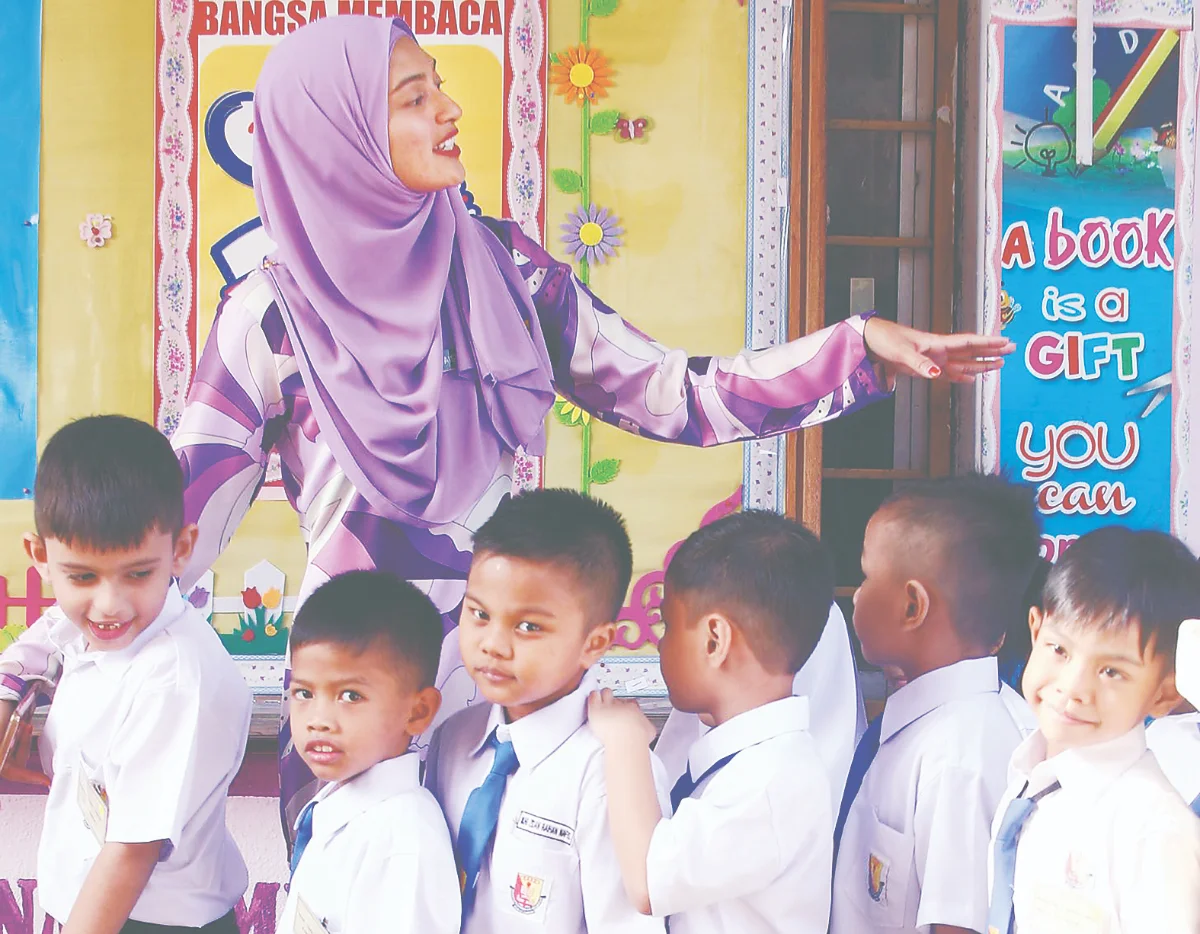
Children need open and safe spaces in schools and neighbourhoods that encourage exploration and different types of play.
MALAYSIA’S visionary push for an earlier start to formal education presents a historic opportunity: to future-ready not just a smarter generation but a healthier, more connected one.
However, our nation’s success depends not only on how early we start but also on how wisely we begin.
As we have observed over the years, there is rising distress among our young, marked by anxiety, stress, behavioural issues and a troubling pipeline into teenage mental health challenges.
Having worked for over 20 years in psychology – from the frontlines of Unicef (United Nations Children’s Fund) school interventions to facilitating positive development sessions with hundreds of teachers and children across Malaysia – one critical truth stands out: our academic ambitions take root when we first cultivate the fertile ground of social-emotional well-being.
Here is what we can do together:
Four transformative approaches for cognitive-social-emotional development
Environments that teach: A central contributor to a child’s mental health is the learning environment.
We cannot expect young children to sit quietly in crowded classrooms for long periods.
Their brains and bodies are developmentally wired for movement, exploration and sensory engagement.
To demand unnatural stillness is to invite frustration, dysregulation and a learned aversion to school.
Children need open and safe spaces in schools and neighbourhoods that encourage exploration and different types of play.
The environment itself should be a “third teacher”, inviting unstructured time to “experiment” with their world, curiosity, collaboration and physical activity.
Curriculum with empathy, kindness and voice: Beyond academics, our foundational curriculum must be social-emotional learning, with the explicit teaching and consistent modelling of empathy and kindness at its heart.
Children learn compassion not from posters but from the daily interactions they witness and experience.
Children’s development accelerates when we recognise the value of each of their voices that express their thoughts and feelings.
Adults – teachers and parents alike – must model how to listen deeply, acknowledge feelings (“I see you’re upset”) and show care.
This modelling is the seed from which positive peer and adult friendships grow.
They must learn that conflict is resolved through empathetic communication and repair – not through fear, the rotan, shouting or humiliation.
Learning must occur in an atmosphere of psychological safety, where kindness is the expected currency of interaction.
Inclusion as the practice of empathy: Welcoming neurodiverse children – children with ADHD, autism and learning differences – into classrooms with tailored support is the highest practical application of empathy.
An inclusive classroom actively teaches all children to appreciate different perspectives, to offer help generously and to value diverse ways of being.
It moves kindness from a vague ideal to a daily, lived practice.
Parent-teacher alliance and well-being: The above transformations rest on the triad of teacher well-being, deep parent-teacher collaboration and community support.
Teachers cannot model calm and kindness if they are stressed, burnt-out and unsupported.
Their well-being is non-negotiable.
Parents and teachers must be aligned partners, co-modelling empathetic responses and nurturing positive relationships at home and school.
Communities must provide accessible mental health resources to strengthen this web of support.
Goal: Resilience, fortified by compassion
The goal of this educational transformation is not about coddling or creating a generation of “soft” individuals.
It is precisely the opposite.
True resilience is fortified by compassion – for oneself and for others.
A child who has experienced empathy can self-soothe.
A child who has practised kindness can build strong social bonds, their greatest buffer against life’s stresses.
Resilience is forged in environments where struggle is met with support, not punishment, and where children learn that strength includes the capacity to understand and care for others.
We are building resilient, positive human beings who can think critically, behave with empathy and possess the self-esteem that comes from knowing they are part of a caring community.
This is our most powerful inoculation against the epidemic of mental health challenges our young face today, as well as powerful drivers for future workplace success.
Invitation to action
The four transformative approaches above require courageous and cross-sector cooperation from various stakeholders:
- Policymakers must mandate supportive practices, fund training in empathetic classroom management and phase out punitive disciplinary methods that frustrate positive development;
- Teacher training institutes must place developmental psychology, child-centred teaching and the “how-to” of modelling empathy and fostering inclusion at the core of training; and
- Schools and communities must create ecosystems – from playgrounds to community centres – where empathy and kindness are visibly valued and practised by all.
You and I can have the courage to reimagine education.
The hunger for a more humane, developmentally sound approach to education is profound: to build environments where teachers teach with compassionate authority, parents partner with hope and young children develop the profound, unshakable strength that comes from being seen, understood and taught the transformative power of a kind heart.
Our future in Malaysia depends on it.
Dr Brendan J. Gomez is a consulting psychologist and associate professor at Unitar and a US Fulbrighter.
Comments: [email protected]



