




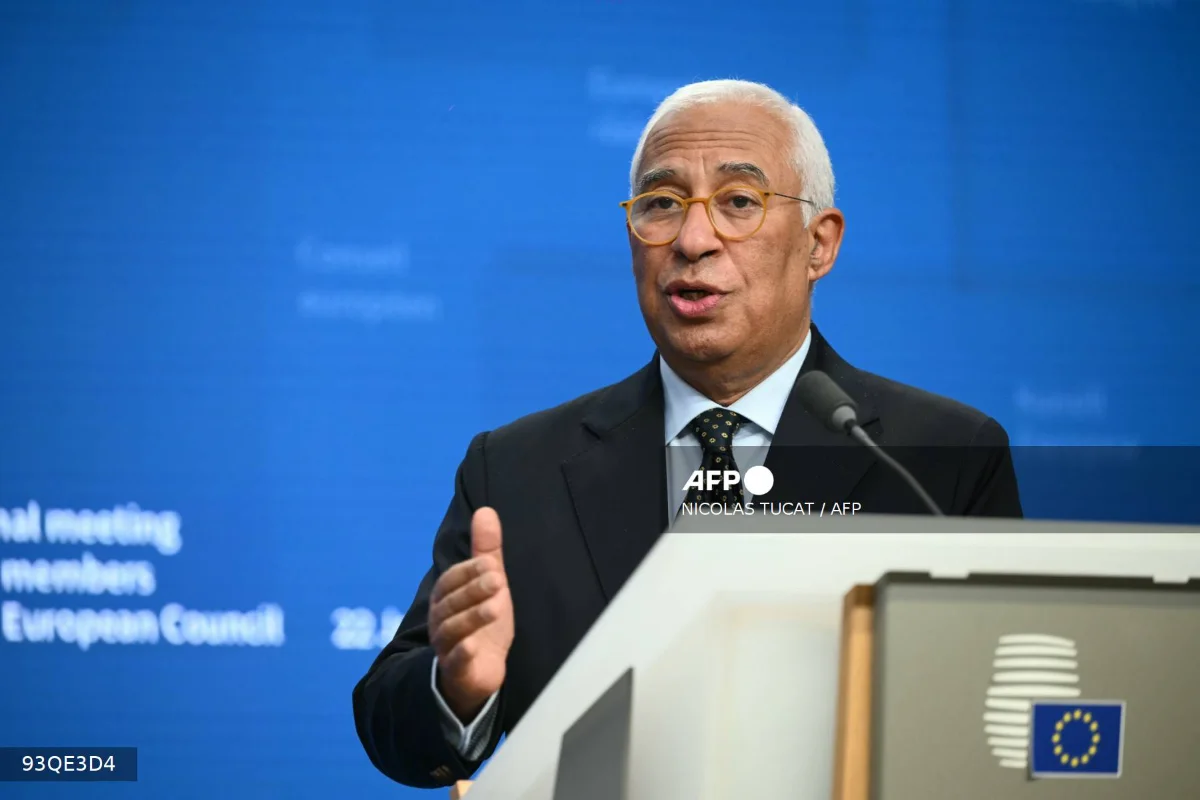
European Council President Antonio Costa arrives in India ahead of a summit to finalise a landmark free trade agreement after nearly 20 years of talks.
NEW DELHI: European Council President Antonio Costa (pic) arrived in India on Sunday as the EU and New Delhi seek to seal a landmark free trade pact.
The agreement would cap nearly two decades of negotiations between the economic behemoths. Costa and European Commission President Ursula von der Leyen are chief guests for India’s Republic Day celebrations on Monday.
An EU-India summit on Tuesday is expected to finalise the accord, described as the “mother of all deals”. “We are on the cusp of a historic trade agreement,” von der Leyen said ahead of the summit.
Bilateral trade in goods reached 120 billion euros (USD 139 billion) in 2024. This marks an increase of nearly 90% over the past decade, according to EU figures.
Trade in services adds a further 60 billion euros (USD 69 billion). The pact is seen as a major win for both sides as they seek new markets amid US tariffs and Chinese export controls.
“The EU and India are moving closer together at the time when the rules-based international order is under unprecedented pressure through wars, coercion and economic fragmentation,” the EU’s top diplomat, Kaja Kallas, said.
Negotiations are reportedly focused on a few sticking points. These include the impact of the EU’s carbon border tax on steel exports and safety standards in pharmaceuticals and automotive sectors.
India is on track to become the world’s fourth largest economy this year, according to IMF projections. The EU eyes India as a crucial future market, while New Delhi seeks European technology and investment.
India has also sought to cut its decades-long dependence on Russia for military hardware. It is diversifying imports and boosting domestic manufacturing, a strategy Europe is mirroring vis-à-vis the United States.



