



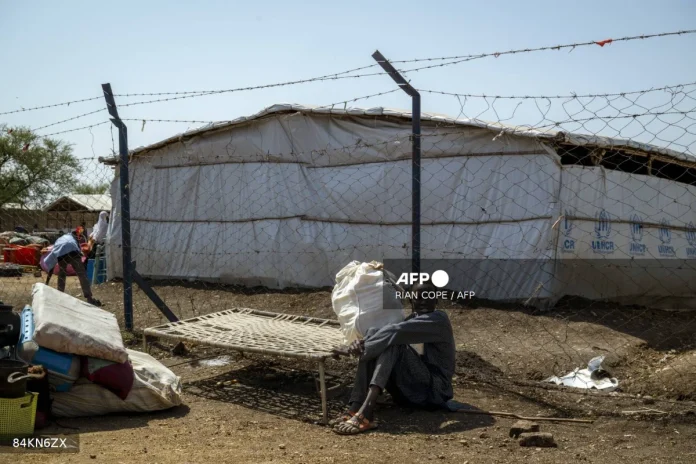
Renewed conflict in South Sudan’s Jonglei state has displaced over 180,000, with reports of barrel bombs and civilians fleeing into swamps.
JUBA: Renewed fighting in South Sudan has displaced more than 180,000 people, with witnesses describing indiscriminate use of barrel bombs and civilians fleeing into swamps.
The violence is currently focused on Jonglei state north of the capital Juba, unravelling the country’s fragile peace.
“I am stuck and if worse comes, the only safe place for me to go is the swamps,” said Daniel Deng, 35, one of thousands displaced by the fighting.
He described heavy fighting last week in Duk county after opposition forces took control only to be driven out by government troops.
“Many people were killed,” said Deng, estimating the number at around 300 fighters.
A power-sharing agreement between the two main factions is all but dead after President Salva Kiir moved against his vice-president, Riek Machar.
Machar was arrested last March and is now on trial for “crimes against humanity”.
Their forces have fought several times over the past year, but the most sustained clashes began in late December in Jonglei.
South Sudanese authorities estimate the number of displaced at more than 180,000 across four counties of Jonglei, the UN humanitarian agency OCHA said.
“Most people are settling under trees. Their homes and health facilities have been looted or burned and there is a lot of hunger,” said Deng.
An NGO source in Juba said the government responded with “indiscriminate” air attacks, including the use of barrel bombs on civilians.
Another NGO source said barrel bombs had landed within 100-200 metres of health facilities.
Many have fled to the state capital, Bor, with a local civil society leader saying the number there “keeps on increasing day and night”.
“We are seeing mobilisation and build-up of military from both sides, a sign that escalation is imminent,” added Bol Deng Bol.
Estimating the death toll is impossible because many locals were still hiding “in the bush”, he said.
“Looting and confiscation of humanitarian assets, reportedly by both parties, have forced the suspension of essential health services for thousands,” the UN’s OCHA said.
Doctors Without Borders (MSF) has struggled to supply teams on the ground in Jonglei, leading to “catastrophic” shortages.
“We don’t have the supplies… Kids will die, it’s as simple as that,” said operations manager Gul Badshah.
Clashes have also been reported in the Upper Nile and Central Equatoria states in recent months.
“The actions in Jonglei could put the country into another dangerous spiral of violence,” warned Barney Afako of the UN Commission on Human Rights in South Sudan.



