




I GREW up in military camps. It was the only childhood I ever knew – spent among rows of army quarters, parade squares and the ever-present rhythm of discipline and duty.
Like many children of armed forces personnel, I often rode in the back of a three-tonne army truck. Not just to school but to competitions as well.
I can still picture it like it was yesterday. I was representing my school in a district-level choral speaking competition in the heart of Kuala Lumpur. Other teams arrived in neat school vans and chartered buses.
Then came us. Climbing out of a three-tonne army truck like we had taken a wrong turn from
a military drill. People stared. Some looked puzzled. Others looked concerned.
We did not win the competition but we definitely won for most dramatic entrance. But for us, it was normal. That was just how army children showed up.
There were no seat belts. No air-conditioning. Just wooden benches, the smell of diesel and a canvas top that barely kept out the sun or rain. The ride was bumpy, loud and uncomfortable – but that was our routine. We never questioned it.
As I got older, what once felt normal began to feel deeply troubling.
Even today, decades later, I still see our soldiers and police officers being ferried in the same kind of open-backed trucks I once rode in as a child. The same bare benches. The same lack of protection. It feels as though nothing has changed – as if the safety of those who stand guard so the rest of us can sleep soundly has always been an afterthought.
We have upgraded everything else – uniforms, weapons and communications systems. Yet somehow, we are still ferrying our personnel around in trucks that look like they have rolled straight out of a war museum.
Every time I see one of those trucks hurtling down the highway, I don’t wonder if something might go wrong, I just wondered when.
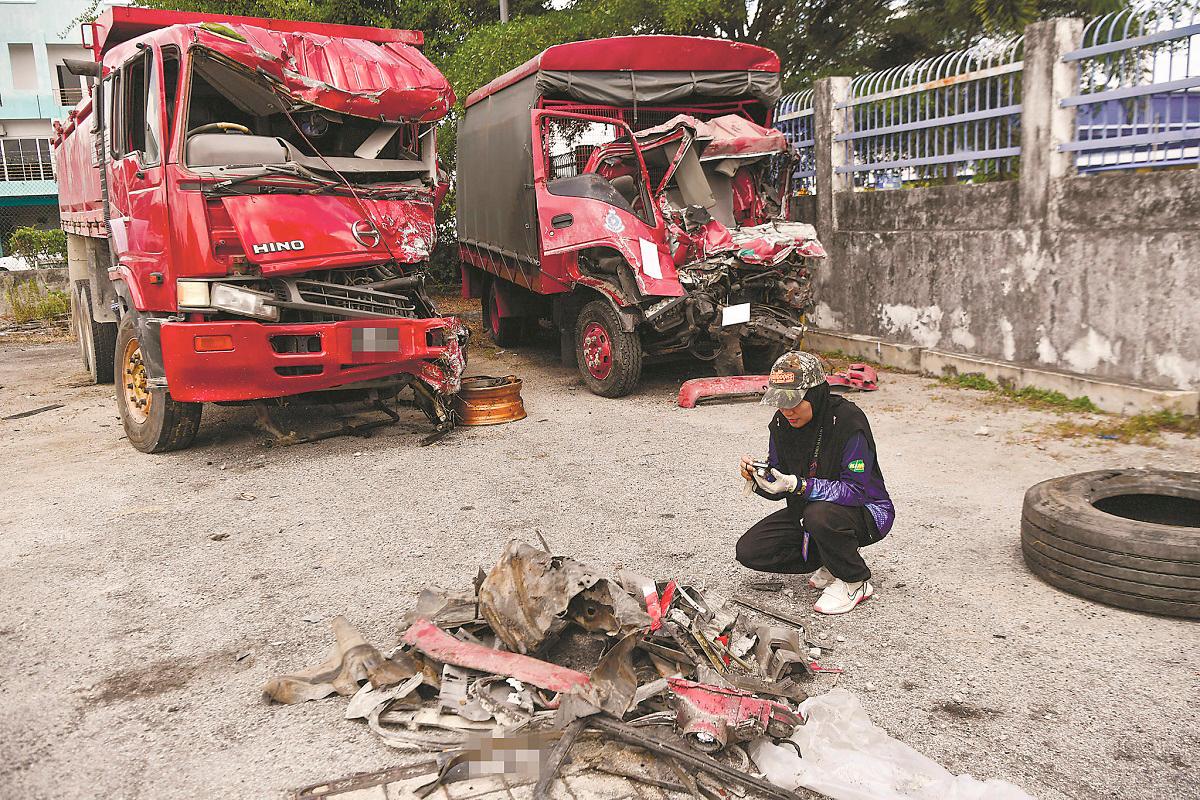
On May 13, something did go terribly wrong.
A truck carrying Federal Reserve Unit (FRU) officers collided with a gravel-laden trailer near Bidor, Perak. They had just completed their duties in Teluk Intan and were returning to their base in Ipoh. Nine officers never made it back.
They did not fall in the line of duty. They died on a routine journey along a Malaysian road because of a transport system that failed them. A system we should have fixed long ago.
Beyond the understandable anger directed at the trailer driver, we need to examine this tragedy with a wider lens. Yes, the driver has been charged.
The transport company is under investigation. Puspakom, the vehicle inspection authority, has pledged its cooperation.
However, focusing solely on individual fault risks missing a deeper, more uncomfortable truth: this was not a random accident. It was the foreseeable consequence of a system that has tolerated outdated practices for far too long.
In the days that followed, Inspector-General of Police Tan Sri Razarudin Husain announced that safety upgrades were being considered – including reinforced vehicles, buses instead of trucks and police escorts. These are welcome steps, but they also beg the question: Why did it take nine deaths for action to even be discussed?
In most modern militaries and police forces around the world, open-backed trucks are no longer used to transport personnel. Officers travel in buses, vans or purpose-built carriers fitted with seat belts, reinforced frames and other basic safety features. These are not luxuries. They are the minimum standard when lives are on the line.
From an Islamic perspective, hifz al-nafs or the preservation of life, is among the highest objectives of the maqaṣid al-shariah, the higher intents of Islamic law.
Preserving life is not simply a moral aspiration; it is a duty. It is a sacred amanah – a trust – placed upon those in positions of leadership.
When lives are lost due to preventable neglect, especially among those who risk their own for the safety of others, it reflects a serious failure to uphold that amanah.
We need more than condolences and cosmetic fixes. We need a national-level policy on the safe transport of uniformed personnel – one that clearly defines safety standards, mandates the replacement or retrofitting of unsuitable vehicles, institutes regular audits and ensures accountability at the leadership level.
Because behind every uniform is a person – a father, a mother, a son, a daughter. They deserve more than ceremonial burials after a tragedy. They deserve safety while they serve and dignity in how they are transported.
I think of those lives. And I think of my own childhood. Climbing out of that same kind of truck in the middle of Kuala Lumpur, unaware of the risks we took as a matter of routine.
I didn’t know then how dangerous it was. But now I do and so do we all.
Let this not become another tragedy we mourn and forget. Let it be the turning point – the moment we say, clearly and collectively: this ends here. Only then can we say their lives truly mattered. Only then can we stop asking
“what if” and start building a system that ensures “never again”.
Dr Mohd Zaidi Md Zabri is the interim director at the Centre of Excellence for Research and Innovation for Islamic Economics,
ISRA Institute, INCEIF University.
Comments: [email protected]



