




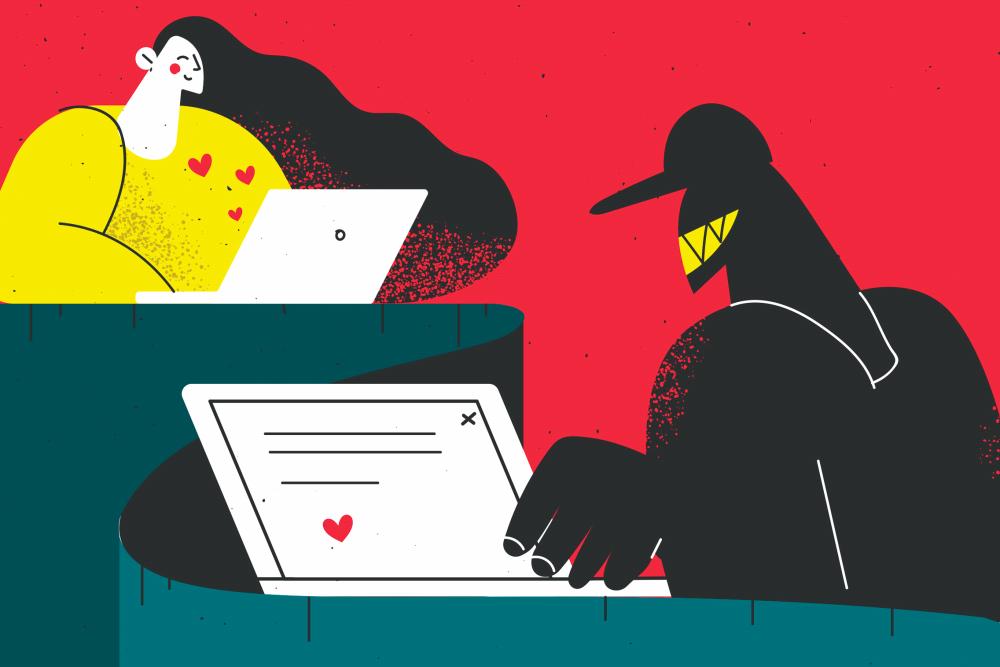
FINDING Mr. Right in the 21st century can be a daunting task. Digitalisation and bots have taken over our lives and made almost every aspect of it have a virtual counterpart, and dating is no exception.
The Netflix documentary The Tinder Swindler reminds us that there is often more than meets the eye when it comes to modern-day dating.
It chronicled the bizarre and shocking tale of Simon Leviev, a serial scammer who posed as a billionaire on the popular dating app, Tinder, who victimised numerous women by stealing more than a million dollars from all of them to fund his outrageous lifestyle.
With that said, Malaysians too can potentially fall into love scam traps set up by irresponsible opportunists using fake identities, sob stories and empty promises using dating apps or social media platforms – all to talk the lovestruck out of their savings.
Authorities reported 1,582 love scam cases in 2020 amounting to a loss of RM58.33 million, and in 2021, 549 love scam cases were reported in the first four months of the year, valued at RM20.58 million.
We turned to Genevieve Noakes, Head of Compliance for Asia Pacific at Wise to provide a unique perspective on romance scam prevention, given her experience working at the Australian Transaction Reports and Analysis Centre (AUSTRAC).
Here are some guidelines lovestruck Malaysians can follow to avoid getting scammed.
What do you think led to the rise of love scams?
“Malaysians are spending a significant amount of their time on the internet and social media while also being active on dating apps, the opportunity for love scams has increased as well.
“The psychology of this could be that many people who were restricted during the lockdowns felt lonely and were seeking companionship, and without close contact to your normal support network which can make people more vulnerable to love scams.”
What are the signs of a love scam? How do we differentiate a real online love interest vs a scam?
“If you ask a new love interest questions and they don’t give you straight answers or question why you’re asking, that could be a red flag. Ask specific questions about details given in a profile. A scammer may stumble over remembering details or making a story fit.
“If the person you’re talking to hesitates to use your name and instead frequently uses pet names, that can be an indication that the messages are pre-written or coming from a script. Beware if the individual promises to meet in person but then always comes up with an excuse why they can’t – especially if those reasons are related to money.
“If you haven’t met the person after a few months, for whatever reason, you have good reason to be suspicious and it should also be considered a red flag. If something seems off, it probably is, especially if things seem to be moving quickly and seem too good to be true.
“It’s better to be safe than sorry, so you can always run the situation through a trusted friend or loved one. If you’re very suspicious, contact your local scamwatch, or if you have already sent funds, you should immediately contact your financial institution and the police.”
Where do most of these scammers come from?
“Popular social media platforms and dating apps provide a catchment of potential victims to identify and work their scam on. Scammers go through great lengths to catfish their fake identities through these platforms.
“Platforms that provide tools for daily interaction between a scammer and many potential victims help the scammer build a convincing narrative to justify giving money on the pretence of being in dire need.”



