




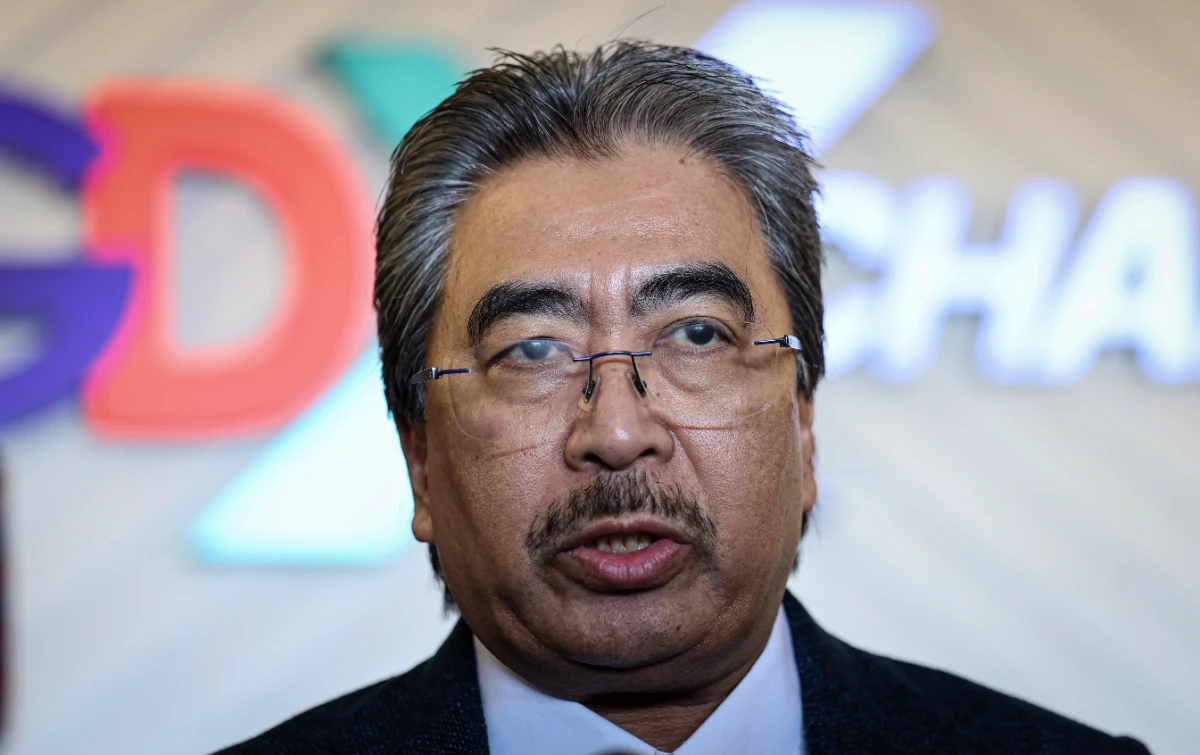
Minister Johari urges companies to adopt hedging and strategic business measures to manage currency risks from ringgit fluctuations effectively.
KUALA LUMPUR: Companies must actively manage currency risks through appropriate hedging and business strategies, said Investment, Trade and Industry Minister Datuk Seri Johari Abdul Ghani.
He stated that fluctuations in the ringgit are a normal market occurrence and part of the broader economic cycle. Their impact differs across sectors depending on business models and market exposure.
“While currency movements may create challenges for some, they also present opportunities for others,” he said. He emphasised the importance of businesses managing risks effectively through strategies like hedging, supply chain protection and customer management.
Johari made these remarks when asked about the ringgit strengthening to the 3.9 level against the US dollar last week. He noted the impact of currency movements depends on the type of business, requiring different approaches for various sectors.
On Malaysia signing the US trade deal under the Agreement on Reciprocal Trade (ART), he said it was a pragmatic step to avoid higher tariffs. He explained the agreement provides Malaysia with space and time to negotiate terms, with an included exit clause.
“The government had carefully weighed the costs and benefits before signing,” he added. The priority is to ensure businesses in Malaysia are protected and the economy remains resilient.
Meanwhile, GDEX Bhd managing director Teong Teck Lean said the stronger ringgit is generally positive for the group. He stated it helps reduce costs for services priced in US dollars, such as software licences.
“From a talent perspective, a firmer ringgit could also help with retention,” he said at a press conference. He added that it supports cost efficiency with no major downside to the group’s core operations.
GD Xchange is the technology arm of GDEX, representing its transformation into a technology-driven logistics ecosystem. It brings together partners across areas including supply chain, cybersecurity and the electric vehicle ecosystem.



