




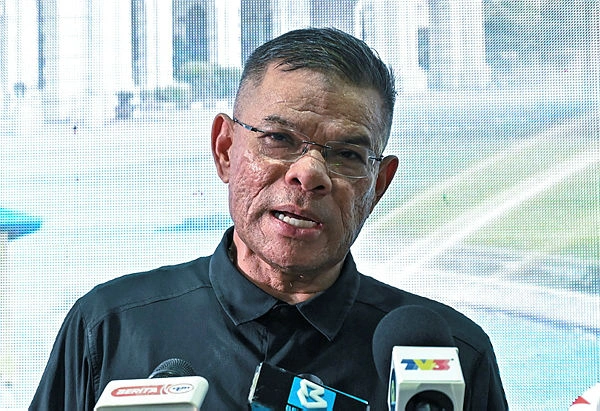
Saifuddin Nasution announces national refugee database with biometric data, moving beyond reliance on UNHCR figures of 190,000-200,000 refugees.
PARIT BUNTAR: The government will begin implementing the Refugee Registration Document (DPP) initiative, starting with detainees at immigration depots, as part of efforts to establish a national refugee database managed directly by Malaysia.
Home Minister Datuk Seri Saifuddin Nasution Ismail said there are currently about 21,000 detainees at immigration depots nationwide, with around 4,000 claiming refugee status.
“At present, refugee management in Malaysia falls under the mandate of the United Nations High Commissioner for Refugees (UNHCR) in Kuala Lumpur. They are responsible for registration, verification, the issuance of refugee cards, and related processes.
“Are we fully satisfied with this arrangement? Not entirely. That is why the government is introducing a second approach, whereby the government itself will undertake the refugee registration process,” he said.
He told reporters this after officiating the Malaysian Prison Department’s ‘Kampung Angkat MADANI’ (Adopted Village) and ‘Sekolah Angkat MADANI’ (Adopted School) Corrective Community Programme 2026 here today.
Also present were Prison Commissioner General Datuk Abdul Aziz Abdul Razak and Home Ministry Secretary-General Datuk Dr Awang Alik Jeman.
Saifuddin Nasution stressed that the determination of whether an individual qualifies as a genuine refugee will only be made after a comprehensive verification process involving security screening by the Immigration Department of Malaysia, the Royal Malaysia Police (PDRM), and other relevant agencies.
“Once all these processes are completed, the Malaysian government itself will decide whether an individual genuinely qualifies for refugee status.
“At present, the figures we rely on come from the UNHCR, which estimates there are between 190,000 and 200,000 people.
“However, once the government conducts the registration process, we will have comprehensive data, including names, addresses, ages, genders, skills, and biometric information such as facial and iris recognition. All of this will be properly recorded,” he said.
He emphasised that possession of the DPP will not alter the existing long-term solutions for refugees, namely resettlement in a third country or repatriation to their country of origin once conditions there are peaceful and safe.



