





Table of Contents
Disclosure Day lacks wonder, conviction of director’s classics
STEVEN Spielberg returns to extraterrestrial territory with Disclosure Day, a 145-minute science-fiction thriller reaching for spiritual awe, political urgency and a grand defence of human empathy.
What it delivers is a slow, frustrating collection of familiar ideas, unexplained devices and characters who rarely give audiences a reason to care.
Disclosure Day preaches communication and warns against allowing fear to lead humanity towards extermination. Yet its message is difficult to take at face value when considered alongside Spielberg’s political history.
In 2006, his foundation donated US$1 million (RM4.1 million) to relief efforts in Israel during Israel’s war on Lebanon. The contribution was not made directly to the Israeli military, but it directed assistance towards Israel while Lebanese civilians were being killed, injured and displaced by Israeli attacks.
The contradiction is even more difficult to ignore amid Israel’s genocide against Palestinians in Gaza. Disclosure Day asks humanity to prevent war, reject dehumanisation and listen to a persecuted alien population, but Spielberg’s public interventions have not shown the same urgency towards Palestinian lives.
A film presenting compassion as a universal responsibility consequently feels remarkably poor in taste. Its climactic instruction to “Listen.” rings hollow when Palestinians have spent years documenting their suffering for a world that continues to look away.
Dropped into conflict
Disclosure Day begins so abruptly that it feels as though its first act has been removed. The audience is thrown into a conspiracy involving alien technology, a government cover-up and characters who appear to understand events that have barely been explained. There is no “three days earlier” flashback arriving to provide context.
It is clearly a stylistic choice and some viewers may appreciate being forced to catch up. Others may find it jarring. The approach creates emotional distance before the central characters have been established, leaving the film with a great deal of conflict but little reason to become invested in it.
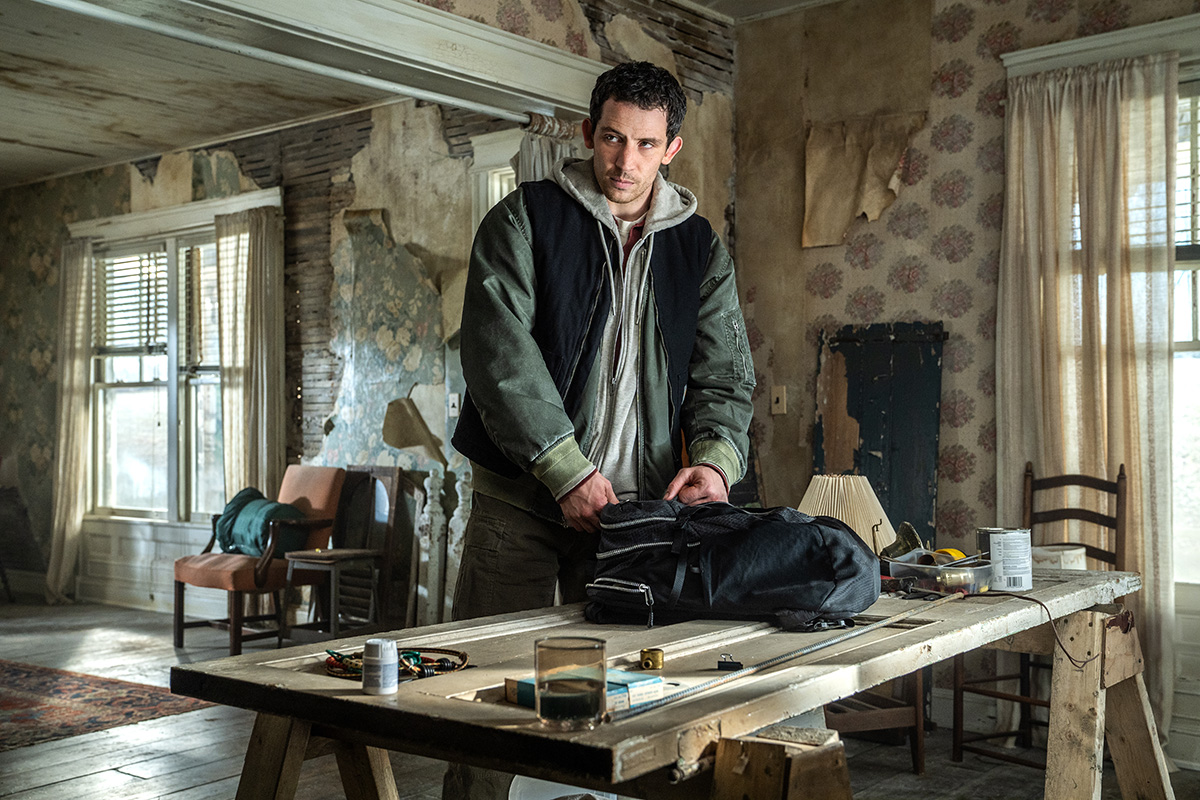
Emily Blunt plays Kansas City meteorologist Margaret Fairchild, while Josh O’Connor is cybersecurity expert Daniel Kellner. They are presented as two strangers of roughly the same age whose lives have followed parallel paths. That connection never entirely convinces, partly because Blunt is around seven years older than O’Connor and the film keeps emphasising their symmetry.
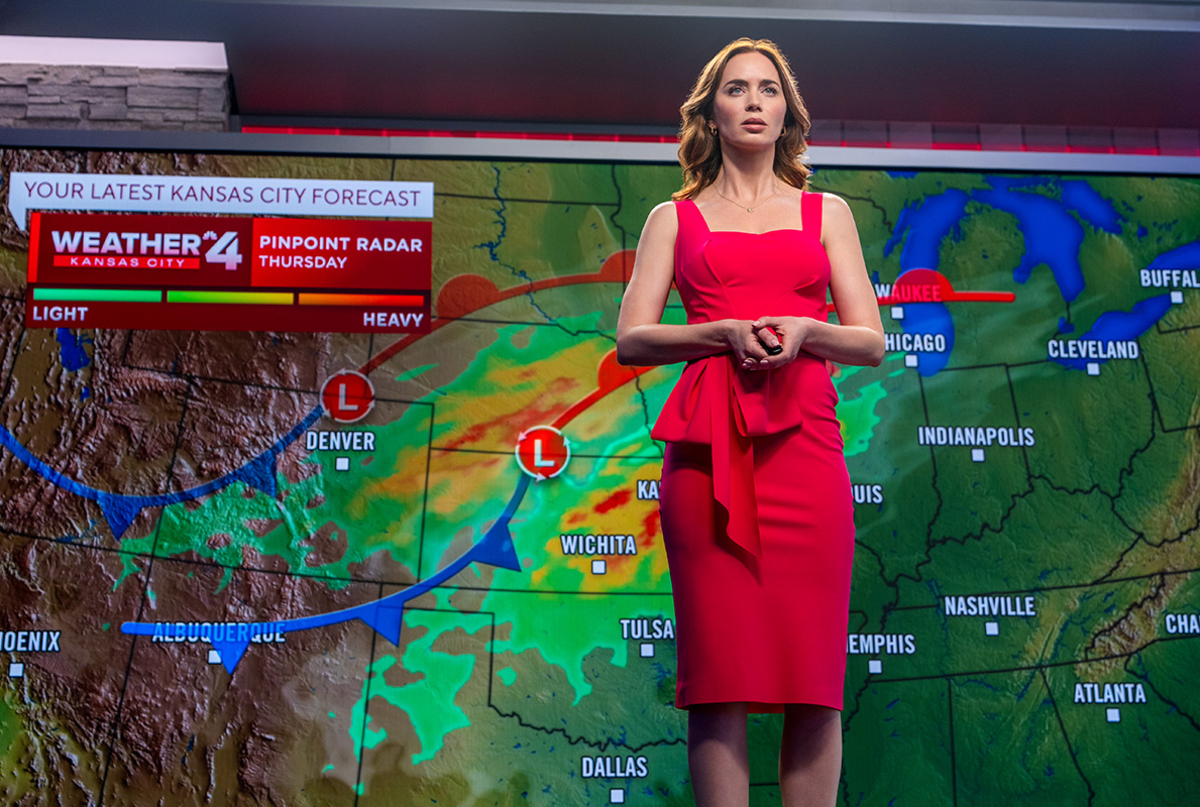
Blunt remains a strong and magnetic performer, but Margaret gradually becomes a prophetic figure who seems ready to lead a new religion. Daniel, by comparison, is mainly good at mathematics and able to understand the alien language. The imbalance makes their supposed shared destiny feel increasingly artificial.
American aliens and British villain
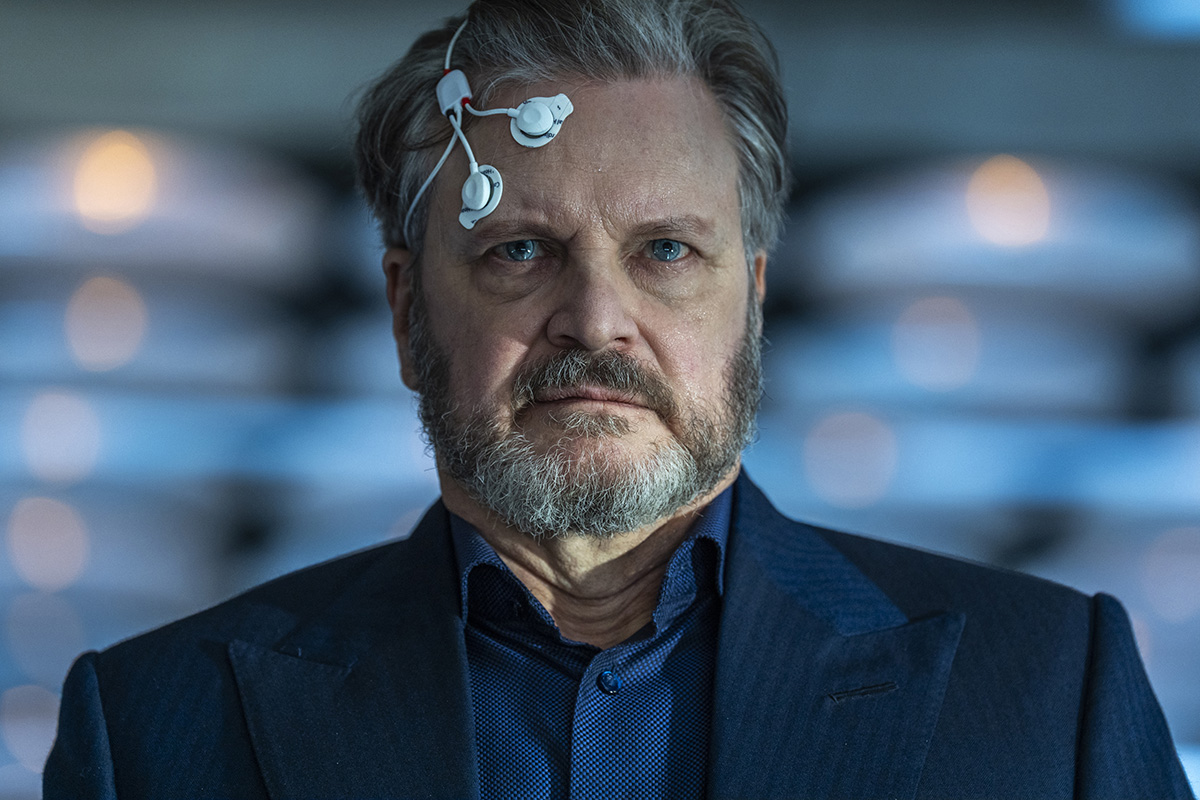
Colin Firth plays Noah Scanlon as the standard English villain, complete with the mannerisms and resources of a Bond antagonist. He runs Wardex, essentially the Men in Black without the humour. It is never explained why he appears to be the only British person inside an otherwise American organisation.
That oddity reflects the film’s broader American exceptionalism. Why is the US apparently the only country with an extensive archive of extraterrestrial evidence? Why must the aliens relay their message through American television and the country’s frequently divisive media system?
Hollywood has spent decades making aliens land, crash or reveal themselves in America. Disclosure Day repeats the trope without questioning why extraterrestrial life would treat the US as the natural centre of human civilisation.
Too many missing answers
The screenplay leaves an irritating number of ideas unexplained. The aliens vary considerably in size, while their spacecraft appear to follow unrelated designs. A mysterious metal MacGuffin functions like a version of the One Ring, granting power whenever the plot requires it, but its purpose and limitations remain vague.
Wardex has also kept an alien in a wheelchair for years. If the whistleblowers already possessed direct proof, why were Margaret and Daniel essential to disclosure? Why must the final revelation be transmitted from a small broadcasting station in Kansas City rather than distributed through social media or uploaded simultaneously around the world?
Disclosure Day says Wardex controls the media, but broadcast television should be among the easiest outlets for the organisation to suppress. The logic becomes even shakier when news organisations accept the alien footage with remarkably little scrutiny. Nobody seriously considers whether the recordings could be fabricated or part of an elaborate hoax.
Courtney Grace, playing the unnamed anchorwoman who reports the breaking news, deserves credit. She delivers the material with enough conviction to make the sequence feel credible even when the journalism does not.
Familiar encounters
Spielberg appears to be attempting a reconciliation between religion and the possibility of extraterrestrial life, but he relies heavily on material from his own career. The film’s emotional premise recalls E.T. the Extra-Terrestrial (1982), its ships and first-contact imagery echo Close Encounters of the Third Kind (1977), while its Roswell mythology recalls Indiana Jones and the Kingdom of the Crystal Skull (2008).
The childhood dream sequence is another weak point. Its glossy artificiality resembles the widely criticised artificial intelligence-generated Coca-Cola Christmas commercial, making a supposedly intimate memory appear synthetic and strangely weightless.

Colman Domingo appears as another philosophical mentor following prominent roles in Michael, Wicked: For Good and The Running Man. His agent deserves credit. Domingo is immensely talented, but Hugo Wakefield is written as an introspective Yoda figure whose guidance never produces a satisfying payoff.
Wyatt Russell, meanwhile, is once again cast as the abrasive boyfriend. Hollywood appears determined to typecast him as variations of the same unpleasant character.
Disclosure Day is not a fun film and its 145 minutes frequently drag. It contains pursuit, conspiracy and spectacle, but the decision to begin in the middle of the conflict denies its characters the foundations needed to make their danger meaningful.
Modern Spielberg remains technically capable, but this is a painful reminder of how far his recent work feels from the clarity, wonder and emotional force of his classics.
Disclosure Day asks the world to listen while saying surprisingly little worth hearing.
READ MORE:
Project Hail Mary review: Pure cosmic fun with Ryan Gosling
Good Luck, Have Fun, Don’t Die review: Absurd, funny and anti-AI
Wake Up Dead Man takes Knives Out to church



