



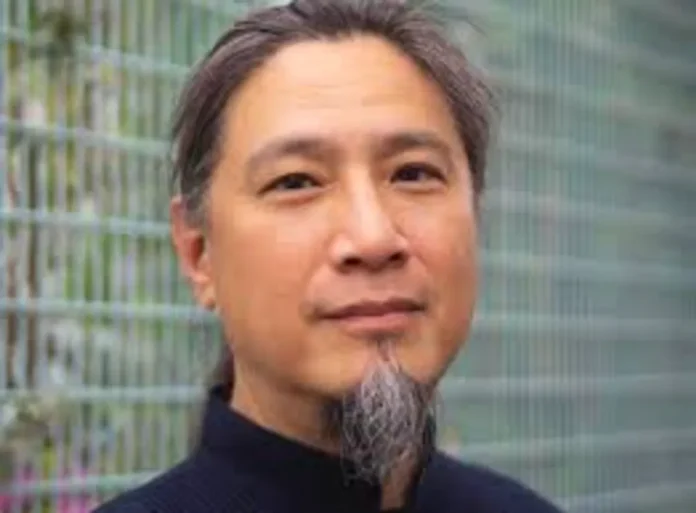
PETALING JAYA: Artificial intelligence (AI) may be advancing at breakneck speed, but global AI pioneer De Kai believes governments and businesses are still thinking about the technology with a mindset that is decades out of date.
And unless countries such as Malaysia shift the conversation beyond rules and compliance, he said, the social fabric itself will start to fray.
In an exclusive interview with SunBiz, the Berkeley and Hong Kong University of Science and Technology professor, who also serves as an independent director at global AI ethics think tank The Future Society, said policymakers remain stuck in a legalistic framework that assumes humans behave rationally, when in reality most human behaviour “more than 95%” is unconscious. That blind spot, he warned, is steering regulators towards solutions that are too mechanical for a technology that interacts deeply with human psychology.
“We keep treating AI like hardware as if you can just slap on a safety seal and call it regulated,” he said.
“Society isn’t held together only by laws. It’s held together by unwritten norms, expectations and the care we have for each other. When you release billions of artificial psychologies into that environment, those dynamics don’t vanish. They get amplified.”
De Kai sees worrying parallels with the early decades of AI research, when the field was trapped in rule-based systems that tried to describe intelligence through logic.
That approach stalled progress for nearly 30 years until neural architectures overturned the old mindset. This time, he said, society cannot afford another long detour.
“And the rules won’t keep up anyway,” he added. “Technology is moving too fast.”
De Kai urged Malaysian businesses not to mistake today’s large language models for the definition of AI. He described transformer-based systems as “Pavlovian”, comparing their training process to how one teaches a pet repetitive, reward-driven and error-prone.
He expects the next wave of AI systems to be smaller, more adaptive and more “toddler-like”, a shift that could undercut the advantage of tech giants currently pouring trillions into massive compute infrastructure.
“The assumption that size equals dominance is going to collapse,” De Kai said. “True AI is small and smart, not big and dumb.”
When asked which Malaysian sectors stand to benefit most from AI, he said the impact will be universal, touching every part of the economy.
But he pointed out that the real challenge isn’t adoption, it’s reconstruction. Just as societies reinvented themselves after the Great Depression and World War II, he believes countries now need to rethink the foundations of income, employment and dignity.
“Incrementalism isn’t going to cut it,” he said. “A huge percentage of jobs will disappear. The psychological effects will hit just as hard as the economic ones. Governments need to get ahead of that and redesign systems that protect people even when their traditional skills no longer matter.”
De Kai also cautioned against overconfidence in human-facing roles, noting that humanoid robots are already preferred in some service settings. Still, he believes the human capacity for expression from music to fashion will remain valued. He tells his own children, who study STEM (science, technology, engineering and mathematics) but excel in the arts, not to abandon the creative side.
“Even if machines can do it, people still want the human version, the way Gen Z suddenly cherishes vinyl,” he said.
While many countries fear they’ve already fallen behind in the global AI race, De Kai thinks the window is still open for Malaysia depending on what the country aims to achieve.
If the ambition is to build genuine AI innovations rather than merely consuming existing tools, the field remains fluid enough for new players to break through, just as Google once did in the search era.
“In the late ’90s everyone thought the search engine battle was over, and they were all wrong,” he said. “The same thing can happen here. The leaders today don’t necessarily own tomorrow.”
But De Kai stressed that any meaningful progress begins with a deeper understanding of how both humans and machines think. Without that, he warned, countries will keep treating AI as a technical issue when it is in fact reshaping something far more fundamental.
“It runs through our psychology, our culture, our institutions, everything,” he said. “The question is not just how we adopt AI. It’s how we stay human while we do it.”



