




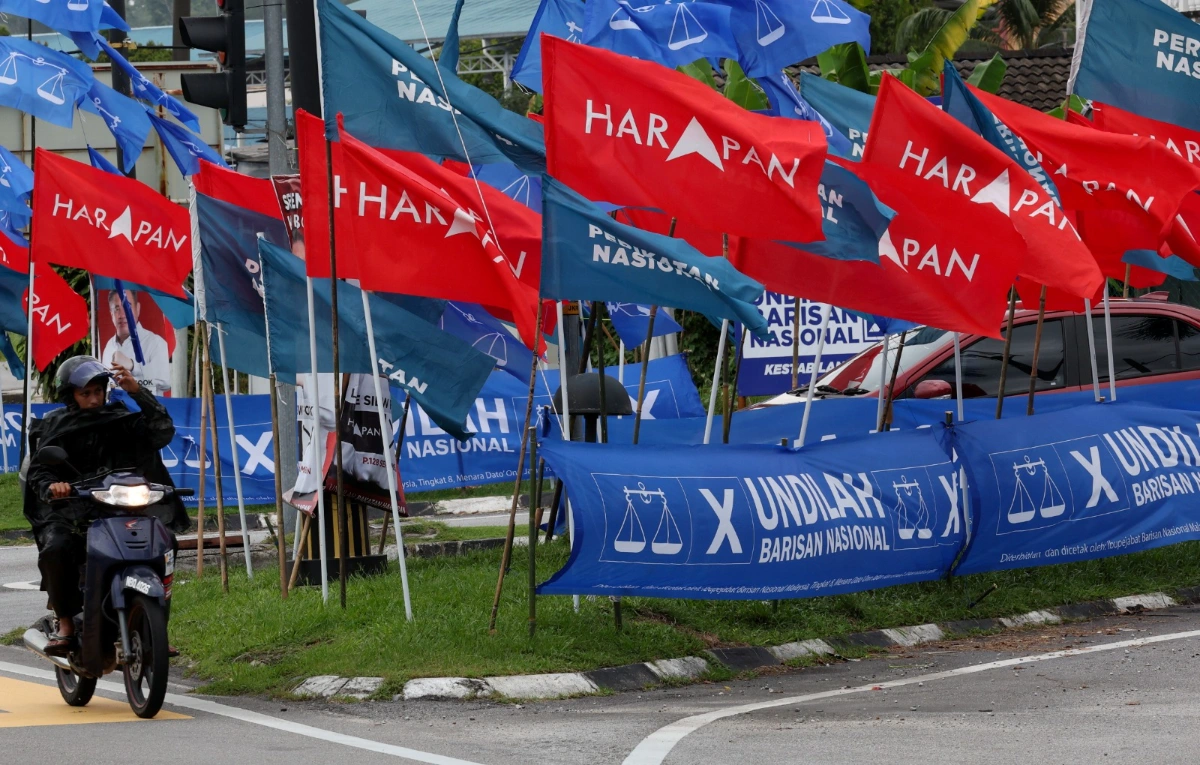
With BN contesting 25 seats and PN fielding candidates in 11 constituencies, both coalitions have pledged to campaign for each other’s candidates in the Aug 1 state election.
PETALING JAYA: The smiles, handshakes and united campaign platforms between Barisan Nasional (BN) and Perikatan Nasional (PN) leaders may project a new political reality in Negeri Sembilan but the toughest battle lies away from the cameras – convincing grassroots supporters to set aside years of rivalry and vote as one.
With BN contesting 25 seats and PN fielding candidates in 11 constituencies, both coalitions have pledged to campaign for each other’s candidates in the Aug 1 state election.
However, Universiti Malaya sociopolitical analyst Prof Datuk Dr Awang Azman Awang Pawi said turning political cooperation into votes would be far more challenging than announcing the pact.
He said the arrangement should not be viewed as a revival of Muafakat Nasional, but rather as “more of a political ceasefire and tactical partnership rather than a full ideological alignment”. “Both sides are now more pragmatic.
BN wants to regain control of Negeri Sembilan, while PAS needs political space after PN failed to win any seats in the Johor state election.”
Awang Azman said the cooperation remained fragile as Bersatu was contesting separately in 24 seats, creating three-cornered contests in 21 of the state’s 36 constituencies.
“This suggests that what is taking shape is closer to an Umno-PAS understanding rather than a comprehensive PNwide consolidation.”
He said declarations by party leaders that old rivalries had ended would not automatically translate into support at the grassroots level.
“The grassroots will only believe it when they see fair seat allocations, genuine joint campaigning and assurances regarding government formation after the election.”
Awang Azman said the bigger challenge was not persuading PAS supporters to back BN candidates but convincing traditional BN supporters to support PAS or other PN candidates.
He said moderate Umno supporters, particularly urban and fence-sitting voters, might accept the tactical cooperation without necessarily embracing PAS’ political approach.
“They may also choose not to turn out, spoil their votes or return to PH if PN candidates are perceived as too hardline or lacking strong ties with the local community.”
Awang Azman said vote transfers could not be assumed simply because party leaders endorsed the cooperation, as they depended on several factors, including candidate quality, local acceptance, campaign messaging and BN-PN’s ability to assure voters that the partnership would not alter Negeri Sembilan’s moderate and pluralistic character.
Beyond voter behaviour, he said the alliance could also face resistance from within its own political machinery, particularly among local leaders who were denied the opportunity to contest.
He said state politics remained heavily influenced by branch networks, political families and long-standing constituency rivalries, meaning sidelined leaders could weaken campaigns without openly rebelling.
“They may not openly sabotage the campaign but they could slow down machinery operations, fail to mobilise voters or provide only half-hearted support.
“The optics of leaders sharing the stage do not prove that the grassroots machinery has truly united. The real test is whether flags, operation rooms, campaign workers and voter databases can be shared.
“In electoral politics, cooperation that fails at the campaign headquarters level cannot be rescued by leaders’ photographs on stage.”
Looking beyond the state election, Awang Azman said the emerging political realignment should also serve as a warning for Pakatan Harapan (PH).
He said PH could no longer rely solely on Prime Minister Datuk Seri Anwar Ibrahim’s leadership or the narrative of political stability to retain voter support.
Instead, he said the coalition must rebuild its reformist identity through policies that clearly differentiate it from BN.
“PH also needs to provide stronger explanation on several policies such as the cost of living, employment and the government’s performance. PH has to rebuild support among non-Malay and moderate Malay voters, and develop an electoral strategy that does not assume BN will remain its automatic partner.”
Awang Azman said the Negeri Sembilan election would ultimately determine whether the BN-PN understanding could evolve into a broader political model or remain a one-off tactical arrangement.
“If successful, the country’s political equation will change.
“BN will have more options, PN will gain a pathway back to power, while PH can no longer assume that the Unity government provides electoral security.



