




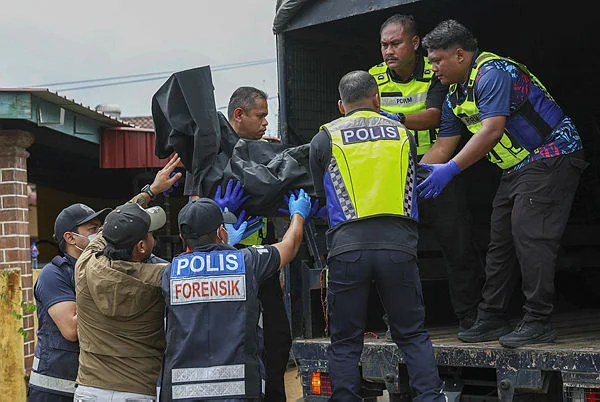
The Kuantan murder-suicide forces a national reckoning on hidden emotional suffering and the urgent need to destigmatise seeking help
THEY were found inside a home that should have been safe – a place that once held a family, now emptied of life.
The tragedy in Kuantan on the first day of Chinese New Year is difficult to write about, not because the facts are unclear but because they are unbearably clear.
A man killed his wife, his two young children and his mother, before taking his own life. Five people. Three generations. An entire family lost inside the walls of a house meant to protect them.
In moments like this, we search for explanations. We read official statements, follow developments and wait for details that may help us understand how something so violent could emerge from what appeared to be an ordinary life.
Mental health is often mentioned – almost instinctively – in the aftermath of tragedies like this. But beyond the headlines and the labels, a heavier question lingers: What was happening long before this family became a crime scene?
Somewhere before the sirens and sealed doors, there was a slow unravelling. A person carrying a burden that grew heavier with time. A household under pressure and a silence that deepened day by day. These things do not appear overnight; they build quietly, often disguised as stress, exhaustion or private family matters.
In Malaysia, we are taught to endure. We pride ourselves on coping and pushing through hardship without complaint. We tell ourselves that everyone is struggling, that problems are part of life, that family issues should remain behind closed doors.
We confuse silence with strength and suffering alone with resilience. Hence, emotional distress is often hidden behind routine, work, responsibilities and polite smiles.
Irritability is dismissed as stress, withdrawal is brushed off as tiredness and anger is excused. We notice the cracks but we look away, hoping they will seal themselves. We only pay attention when the silence becomes catastrophic.
After tragedies like this, we ask familiar questions. Why didn’t he seek help? Why didn’t someone intervene? Why were the warning signs missed? But perhaps the most uncomfortable truth is that we have yet to build a culture where asking for help feels safe.
For many Malaysians, seeking mental health support still carries shame. It is seen too often as a weakness, failure or personal flaw. There is fear of judgement – of being labelled, misunderstood or treated differently.
For men in particular, emotional pain is something to suppress, not share. Vulnerability is discouraged and silence becomes a habit. But emotions do not disappear because they are ignored; they accumulate and they intensify. And when there is no space to name them, no support to hold them, they can surface in destructive ways – inward or outward.
This is not about excusing violence. There is no justification for the loss of innocent lives, especially children who had no say in the struggles of the adults around them. But if we are serious about preventing such tragedies, we must be willing to look beyond shock and condemnation and examine the emotional conditions we allow to exist unchecked.
We must also acknowledge that help is not always easy to access, even for those who want it. Public mental health services are overstretched – appointments take time and private care is costly. Many people do not know where to begin or whether their pain is “serious enough” to deserve attention. So they wait, cope and tell themselves to hold on a little longer.
Sometimes, holding on becomes impossible. What often goes unspoken are those left behind. Families who must grieve not only death but the manner of it – relatives who carry love, confusion, anger and shame all at once. Communities that fall into uneasy silence, unsure how to mourn without judgement.
The Kuantan tragedy forces us to confront an unsettling reality: emotional suffering exists quietly among us and we are often ill-equipped to recognise it, respond to it or speak about it honestly.
We prefer neat explanations and distant narratives. We want to believe such things happen elsewhere, to other people, in circumstances unlike our own. But this happened in an ordinary home, in an ordinary town. That is what makes it unbearable.
Mental health is not just a medical issue; it is a social one. It is about how we listen, how we check in, how we create space for honesty without fear. It is about understanding that asking for help is not a failure but an act of courage.
We cannot undo what happened in Kuantan. Five lives are gone and nothing can bring them back. But we can decide what we do with this knowledge. If we continue to treat emotional distress as something to hide, to endure in silence and to confront only after tragedy strikes, then we should not be surprised when that silence turns deadly again.
Hashini Kavishtri Kannan is the assistant news editor at theSun. Comments: [email protected]



