




Malaysian Press Institute plans professional accreditation and AI training to rebuild public trust in journalism.
PETALING JAYA: The Malaysian Press Institute (MPI) is planning to accord journalists with recognised professional accreditation while preparing newsrooms for the rapid rise of artificial intelligence (AI), as the industry confronts shrinking public trust, algorithm-driven competition and a fast-changing information landscape.
Its president Datuk Yong Soo Heong said the institute was working towards certificate and diploma programmes that would give journalists greater professional recognition through collaborations with higher education institutions, professional bodies and the Malaysian Media Council.
He added that MPI was also expanding its network of journalism experts to help more journalists reskill, while strengthening newsroom leadership and developing a more structured and in-depth training model for media practitioners.
“We want journalists to be sharp in reporting and editing, and adept at making use of technology, including AI.
“However, we remain committed to the principle that it is people, not machines, who should shape the narrative,” he said in his speech at the Malaysian Press Night on Friday.
Yong also illustrated AI’s potential by using ChatGPT to search for information, and presented an AI-generated video of himself to demonstrate how the technology could support newsroom operations.
“Let’s not fight AI. It is not our enemy. AI is technology. However, technology will continue to evolve. Today it’s AI, tomorrow it could be something else.”
He also said MPI wanted to promote media literacy to help the public distinguish credible sources from false narratives amid an increasingly complex information environment.
Reflecting on how journalism has evolved, he said the profession was facing a vastly different landscape from the past.
“In the past, we chased the news. Now, the news chases us.
“In the past, we wrote for readers. Now, we’re competing with algorithms.”
He emphasised that journalism remains a profession built on public trust, with a responsibility “to share information with society and to alert the authorities to take action when necessary”.
He quoted veteran American broadcaster Walter Cronkite, saying: “Journalism is what we need to make democracy work”.
Yong also expressed hope that journalists would continue telling stories that showcase Malaysia’s achievements and strengths.
“I want to see us, as journalists, writing about the good things our country has achieved and writing about our nation’s strengths, so that individuals around the world know what Malaysia is capable of.
“We don’t just report the news. We bring our nation’s stories to the world.”
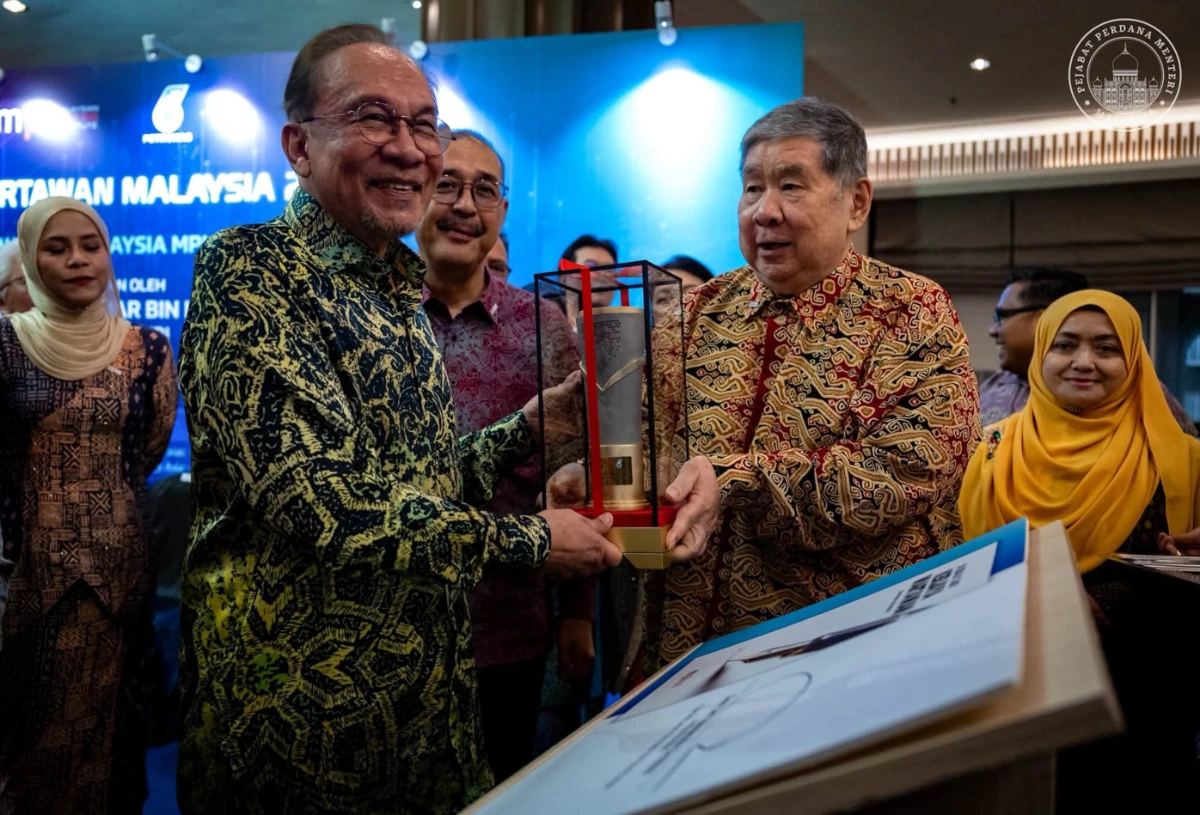
The Malaysian Press Night was held in conjunction with the MPI-Petronas Malaysian Journalism Awards 2025.
theSun’s Azura Abas won the award for Best Column Writing, while Sinar Harian’s Nurul Hidayah Hamid received the prestigious Kajai Award for her special report series Nasib Budak Flat.
Sin Chew Daily’s Lim Kah Siang and Chang David won for Best Feature, while Star Media Group’s Ragananthini Vethasalam, Charles Ramendran and Justin Zack Yusof took Best News Reporting for their series Monsters Prey on Children and The Day I Lost My Smile.
The annual event was backed by more than RM1 million in sponsorships and contributions, including RM450,000 from Petronas for the cash prizes and RM587,000 from 60 organisations.



