




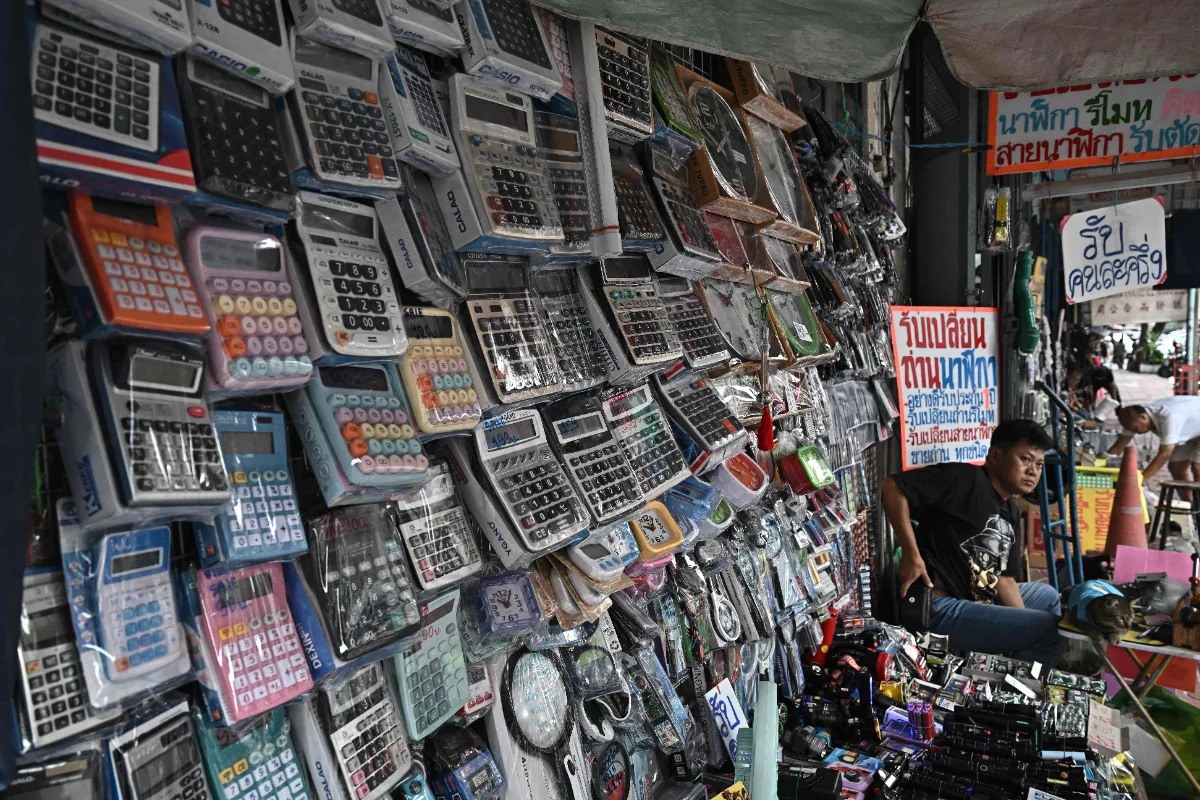
Despite AI’s rapid growth, the humble calculator remains a reliable, affordable tool for millions, with Casio eyeing expansion in developing markets.
TOKYO: The humble pocket calculator faces a world of artificial intelligence, but its makers argue it holds an unbeatable advantage: it never hallucinates.
This enduring reliability translates to millions of sales annually for Japanese giant Casio, which sees potential for growth in specific regions.
Despite lightning-fast AI advances, chatbots can still stumble on basic arithmetic. In contrast, calculators deliver a guaranteed correct answer every time, according to Casio executive Tomoaki Sato.
He conceded the business calculator market is undeniably in decline, potentially following the abacus into obsolescence.
Smartphones and AI now handle everyday sums, with AI models achieving gold-level scores at this year’s prestigious International Mathematical Olympiad.
Yet calculators offer affordability and run on batteries or solar power, a significant advantage for schools in developing nations.
Casio also believes users prefer the tactile feel and dedicated function of a physical device. A shop owner in Bangkok praised her calculator’s durability and its usefulness in overcoming language barriers with customers.
However, a nearby street vendor reported that calculator sales were currently “quiet”.
At a Casio factory in Thailand, assembly lines continue to produce the devices. A company manager stated calculators remain in demand as optimised tools, especially where smartphone connectivity is unreliable.
For the year ending March 2025, Casio sold 39 million calculators worldwide, down from 45 million in 2019-20 but a recovery from the 31 million sold at the pandemic’s peak.
The company’s journey began with the first compact all-electric calculator in 1957. The history of calculation itself made news recently when Christie’s suspended the sale of a 1642 device hailed as the first attempt to substitute the human mind with a machine.
Those attempts have dramatically accelerated with AI. IMO president Gregor Dolinar called AI’s progress in mathematics “fascinating”, noting it’s now easier to ask AI a question than use a scientific calculator.
He believes physical calculators will likely disappear slowly, a trend already evident among his university students who calculate everything on their phones.



