




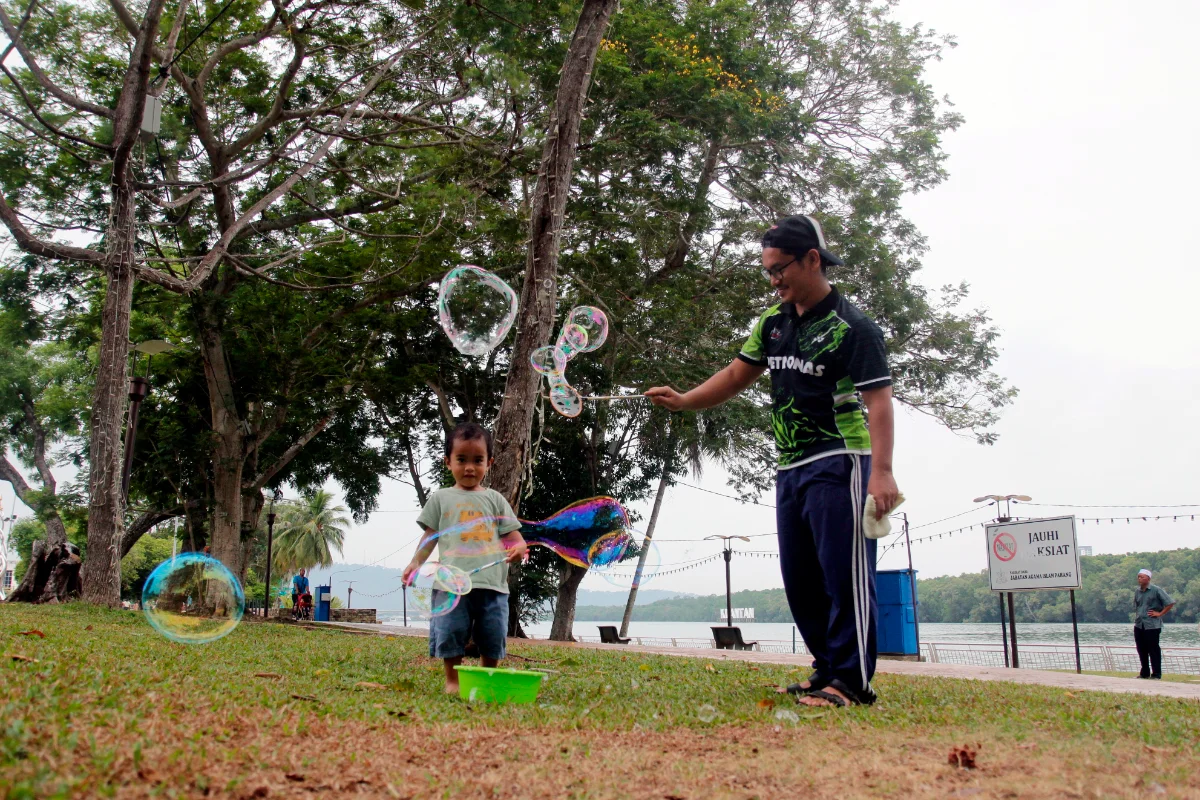
Malaysian fathers often express love through actions, not words, carrying burdens silently while building the foundation for their families’ success.
ASK a Malaysian father if he is tired.
“No.”
Ask if he is worried.
“No.”
Ask if everything is okay.
“Okay.”
Now ask him how many burdens he is carrying. You will never get an answer because generations of fathers in this country were raised to provide first, endure second and talk about their feelings somewhere around never.
Yet, behind countless Malaysian success stories stands a father whose sacrifices rarely make the family photo caption. And perhaps that is why Father’s Day deserves a little more attention than the annual buffet promotion and a WhatsApp message copied from the internet.
If mothers are often celebrated as the heart of the family, fathers are very often the foundation beneath it. Not glamorous. Not flashy. Mostly unseen. But remove it and the whole structure starts wobbling faster than a plastic Raya chair on uneven ground.
Now before anyone starts sharpening their keyboards, this is not a competition between mothers and fathers. A family is not nasi lemak where you must choose between the sambal and the coconut rice. You need both. One complements the other – one nurtures, one steadies. Both carry burdens that deserve recognition.
And in households where fathers are raising children alone, they somehow become provider, protector, cook, counsellor, chauffeur, handyman and reluctant expert on hairstyles despite possessing exactly zero qualifications.
Quite frankly, that deserves a standing ovation and perhaps government-sponsored therapy.
The curious thing about Malaysian fathers is that many of them express love like undercover agents. They don’t say it; they demonstrate it.
Your father may never sit you down and deliver a stirring speech about how proud he is of you. Instead he will ask whether you have topped up your Touch ‘n Go. That is the speech.
He won’t say he is worried about your future. He will casually ask if you have updated your CV. Again, that is the speech.
He won’t post emotional captions online declaring his unconditional love. He will send a blurry photograph of a road accident at 6.17am with the words: “Drive carefully.” And somehow that contains an entire novel’s worth of affection.
In Malaysia, many fathers belong to a generation that treated emotions the way they treated expensive restaurant bills – best not discussed openly.
So they carried things quietly: housing loan, school fees, car payments, emergencies, dreams and disappointments as well as the worries they never mentioned because everyone else already had enough to worry about.
These are men who spent decades waking up before sunrise, battling traffic, dealing with bosses, surviving economic crises and stretching the ringgit like it was made from recycled rubber bands. Then they came home and acted as if everything was perfectly fine – even when it absolutely wasn’t.
And can we talk about how absurdly selfless Malaysian fathers can be? A father will spend RM300 on his child’s school shoes without blinking. Spend RM500 fixing the family car. Spend thousands helping a child through university. But suggest buying himself a new wallet after using the same one since the administration of several prime ministers and suddenly he is an economist.
“No need. Still can use.”
The wallet is held together by hope, gravity and the mercy of God. Still can use.
Meanwhile, some fathers own T-shirts old enough to vote. Yet somehow, those shirts remain active members of the wardrobe. Scientists should study this phenomenon. There may be clues about immortality hidden in those faded round-neck tees.
The truth is that fathers often become victims of their own reliability. Because they are dependable, we assume they will always be there. Because they are strong, we assume they don’t need support. Because they rarely complain, we assume nothing hurts.
Aiyoh! That is not how human beings work. Even pillars crack if enough weight is placed upon them. Even the strongest men have fears, worries and moments of exhaustion. They simply became very good at hiding them. Perhaps, too good.
Which is why Father’s Day matters. Not because fathers need another novelty mug declaring them the “World’s Best Dad”. Most Malaysian fathers already know they are world-class. They just won’t admit it out loud.
It matters because appreciation should not be treated like an emergency response exercise. It shouldn’t only appear once a year after social media reminds us. The fathers who built our lives deserve to hear they matter while they can still hear it.
Call him. Visit him. Buy him a meal. Listen to the story he has told 17 times about how petrol used to cost less than a cup of fancy coffee. Pretend you are hearing it for the first time. That is love too.
And if saying “I love you” feels awkward, don’t worry, you are Malaysian. Just ask whether he has eaten. Offer him the bigger piece of chicken. Tell him to drive safely. He will understand. Because fathers have always been fluent in the language of actions.
Perhaps it is time we became a little more fluent in gratitude – before another Father’s Day comes around and we are once again reminded that some of the greatest heroes in our lives never wore capes. They wore worn-out sandals, carried impossible responsibilities and quietly held up the roof while the rest of us got on with living. Not bad for a man who insists he is “okay”.
Azura Abas is the executive editor of theSun. Comments: [email protected]



